Technology begins with people.
If robots can deliver food to college students, why can’t they deliver food to people who need it most?
That simple question became Project Food Angel, a project I started in 2024 to explore how autonomous robots could help deliver food to people experiencing homelessness.
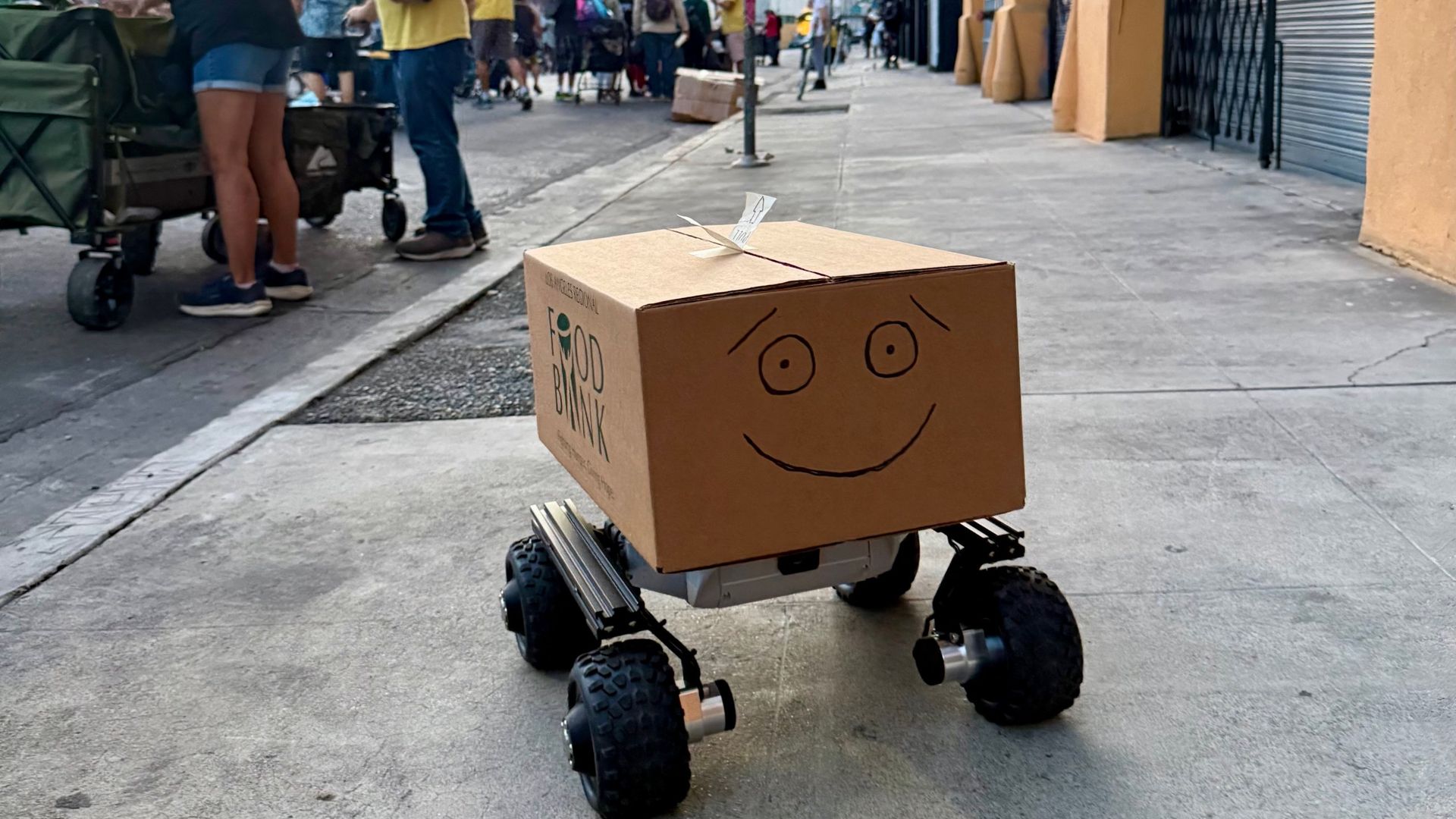
- 100+meals delivered in Skid Row in one month
- 5students on the Food Angel team
- 2024became a permanent exhibit at the Seoul Robot & AI Museum
Simple on purpose
At first, I approached it mostly as an engineering problem. But I quickly learned that building a robot that can deliver food is very different from building one that people actually want approaching them.
The most important design decisions turned out to be surprisingly simple. I wanted the robot to feel clear, harmless, and human:
- HarmlessA cardboard box instead of a metal enclosure
- ClearA handwritten sign instead of a screen
- HumanA smiley face on the front
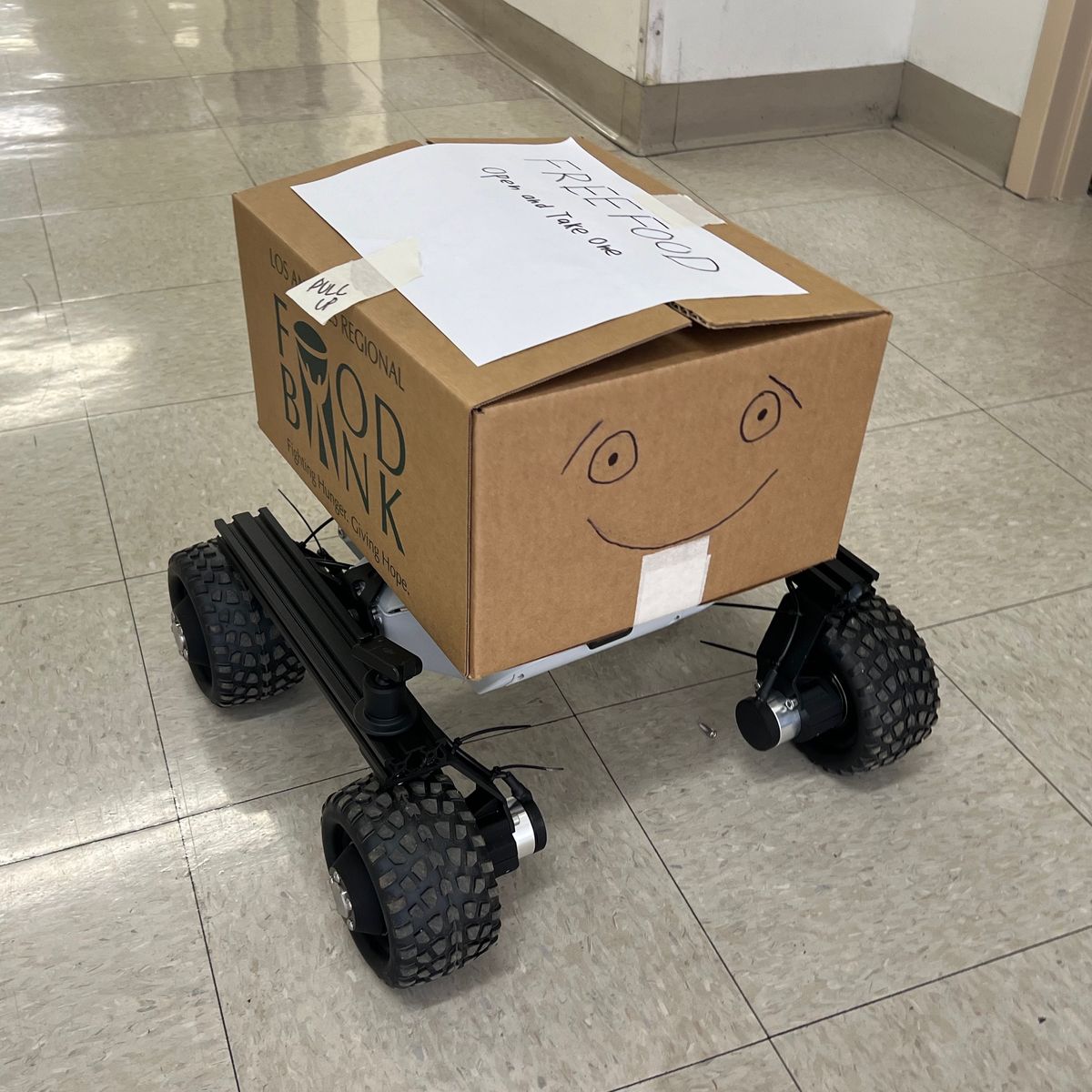
Building it
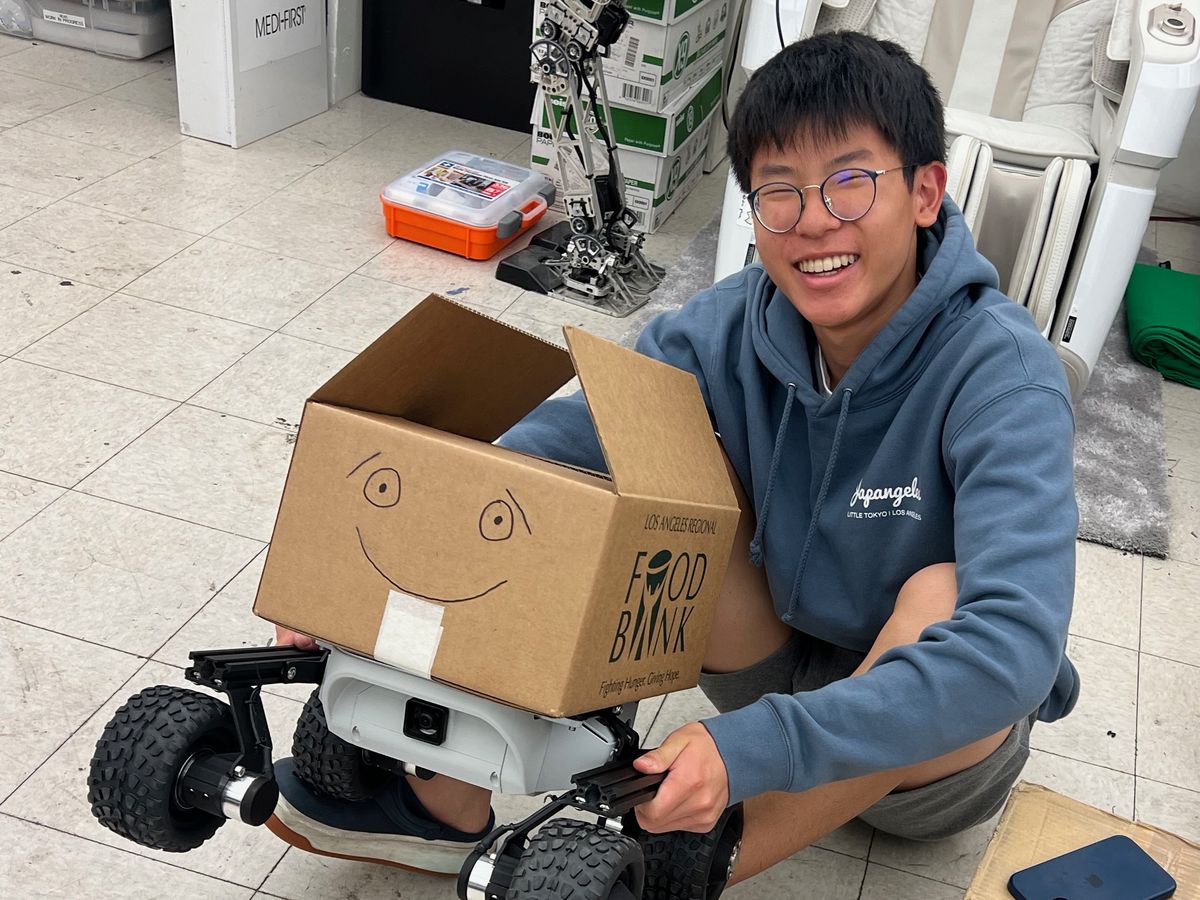
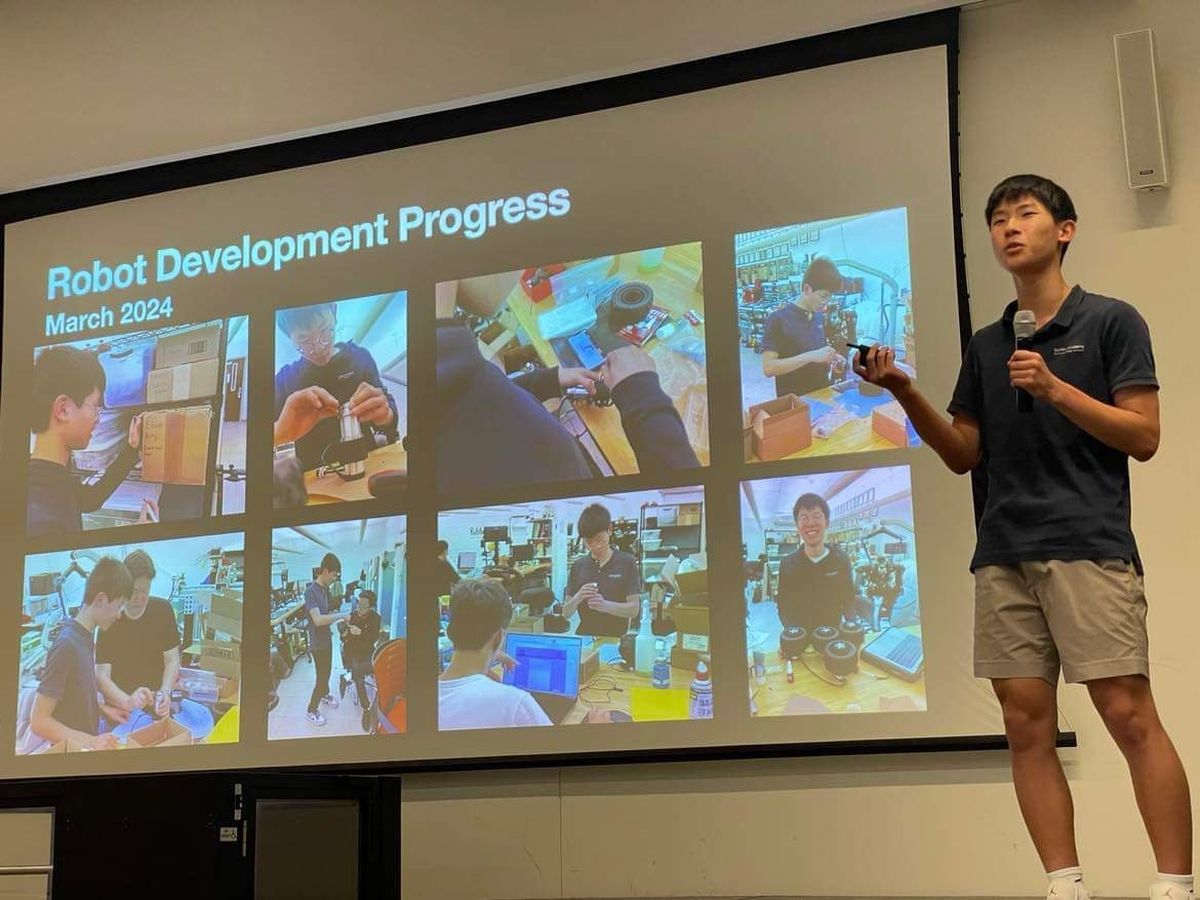
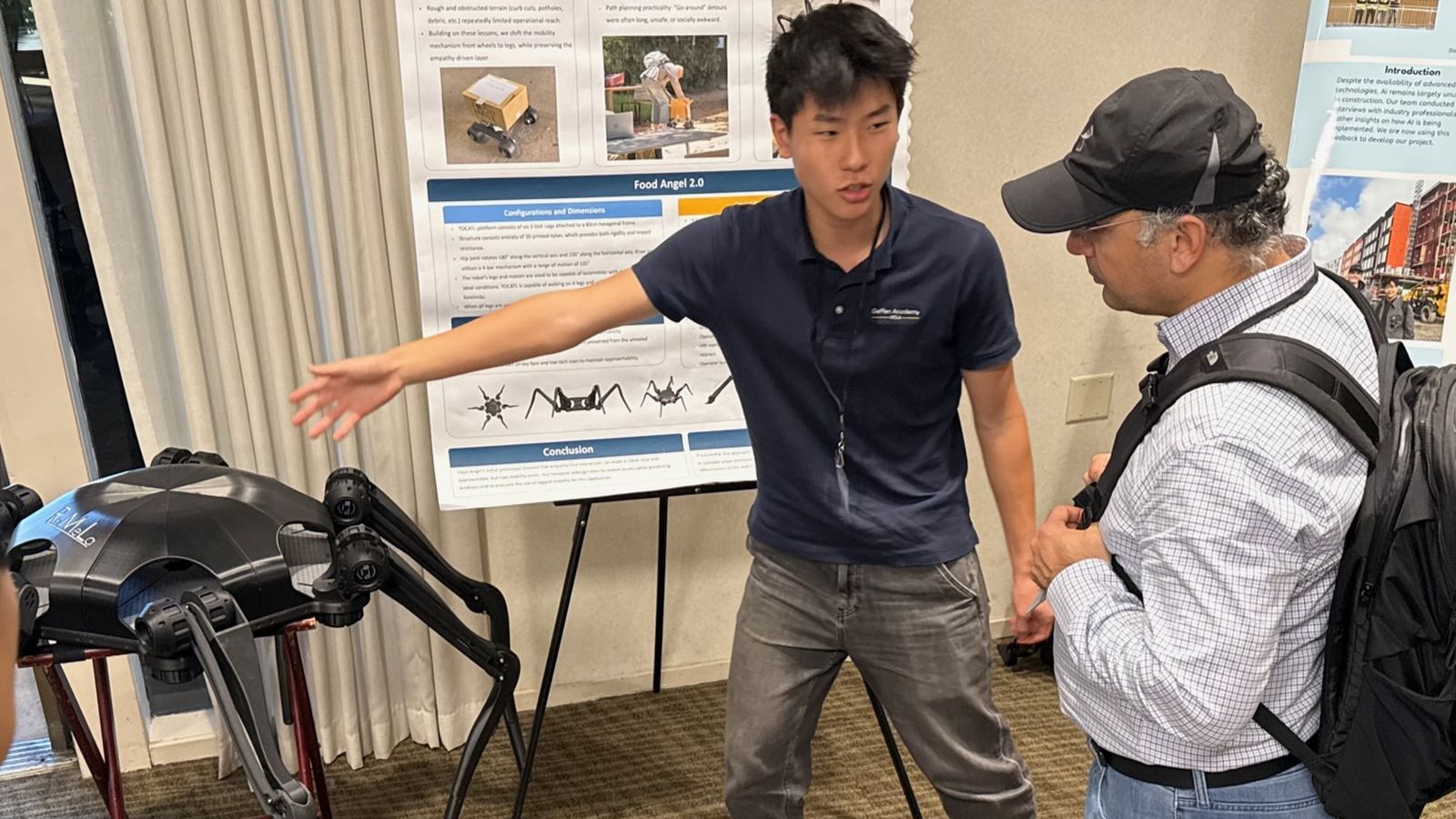
Food Angel grew from a single prototype into a team effort. I lead a team of five students, and we’ve worked with the Los Angeles Regional Food Bank, Union Rescue Mission, and Rolling Robots to take the robot from the lab to the street.
Learning by getting it wrong
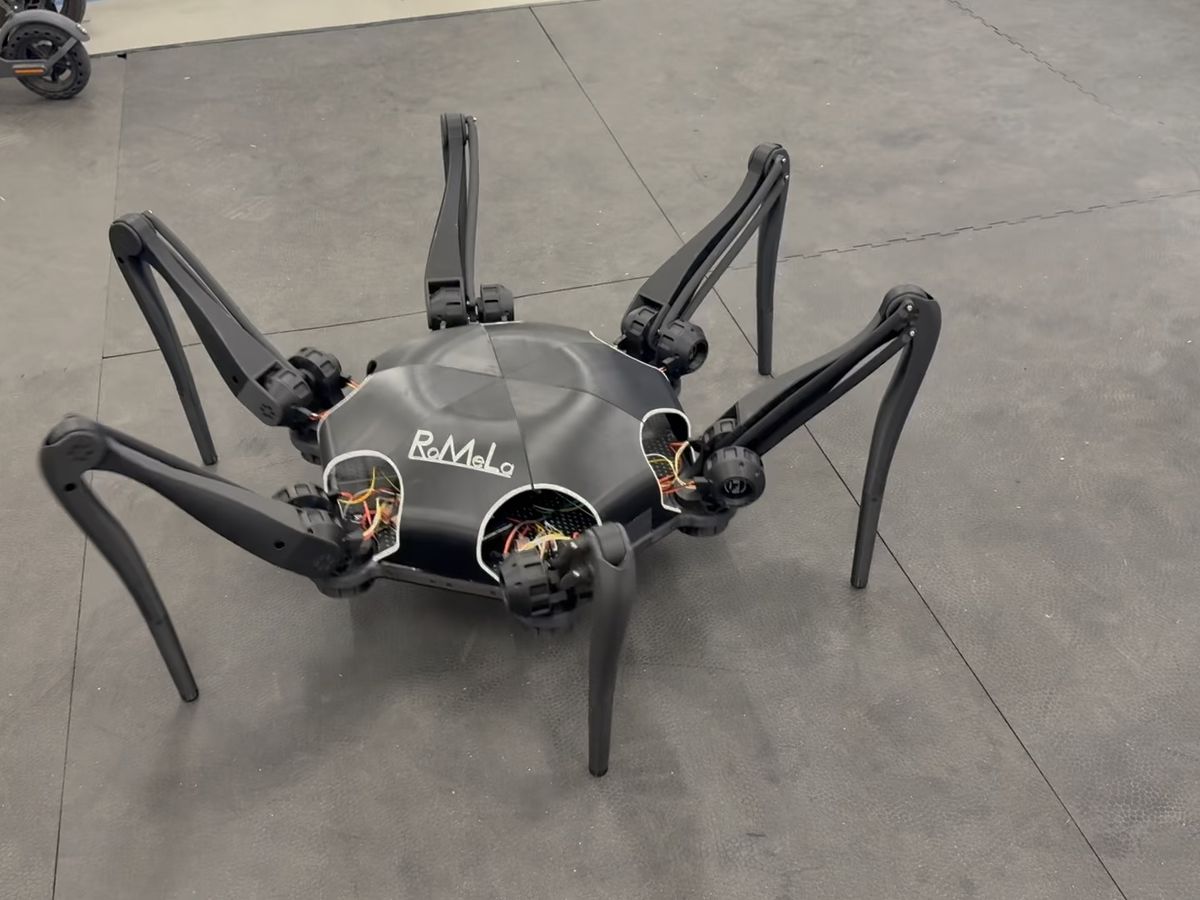
At one point, I became focused on making Food Angel more capable on rough terrain and helped develop a six-legged robot as a possible new platform.
Technically, it was much more impressive. But when I showed it to other robotics researchers, one told me that if he saw it approaching him on the street, he would run the other way.
He was right.
I had become so focused on the technology that I had forgotten the people I was designing it for. It was an embarrassing mistake, but probably one of the most important lessons I learned from the project.
Delivering more than food
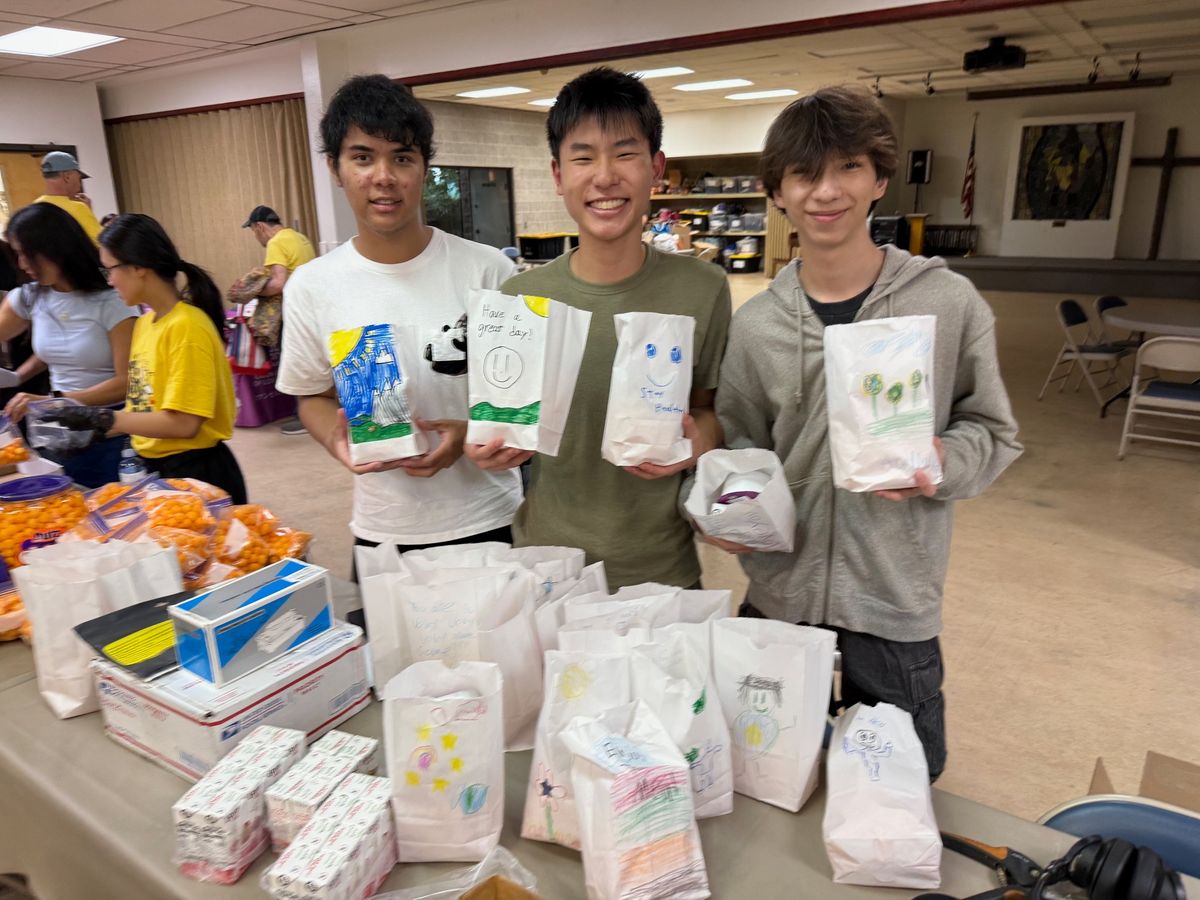
In Skid Row, in one month, we delivered more than 100 meals in bags decorated with drawings and messages from children. Watching someone pause to look at a rainbow drawn on his bag before eating reminded me that what we deliver—and how we deliver it—both matter.
-
1
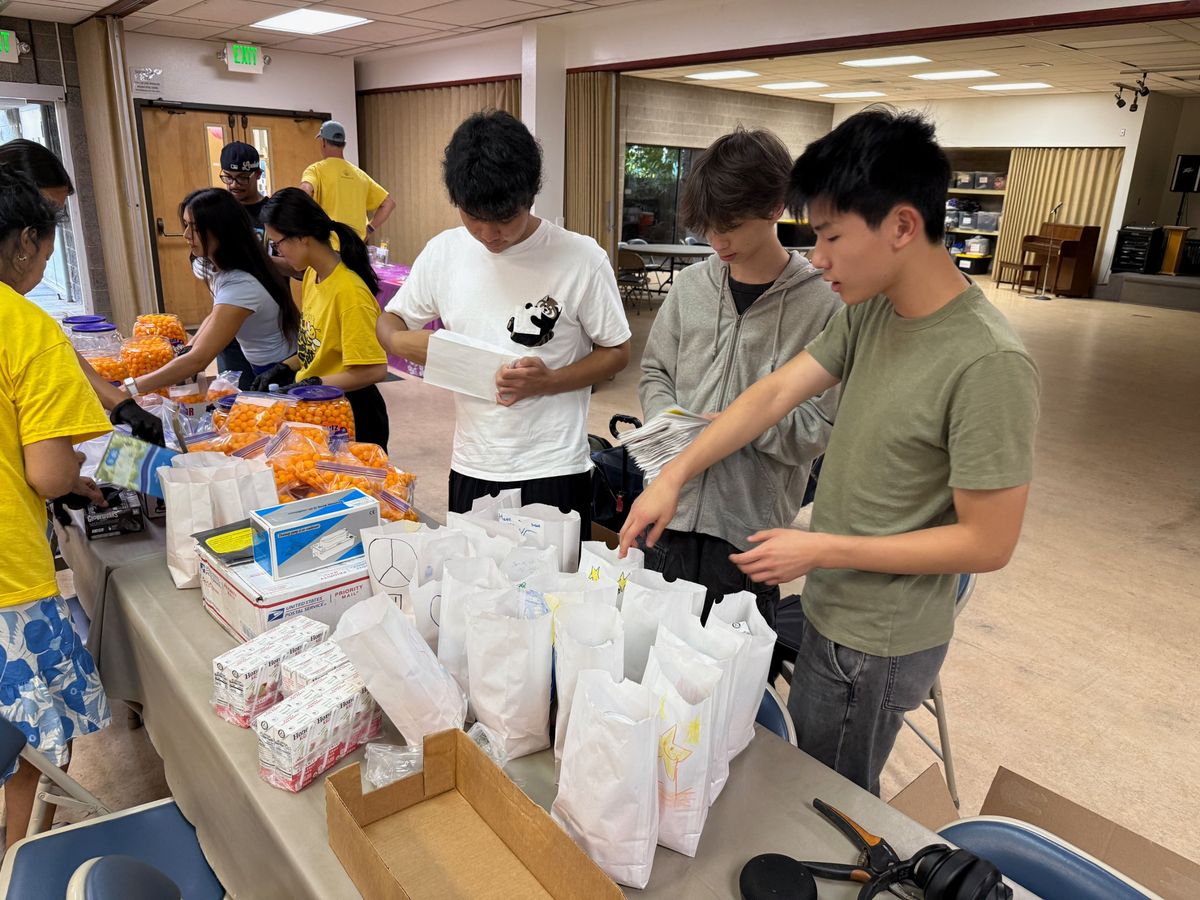
Pack
Friends and volunteers pack each meal by hand.
-
2
Decorate
Children draw pictures and write messages on every bag.
-
3
Deliver
Food Angel rolls up, and people open the box and take a meal.
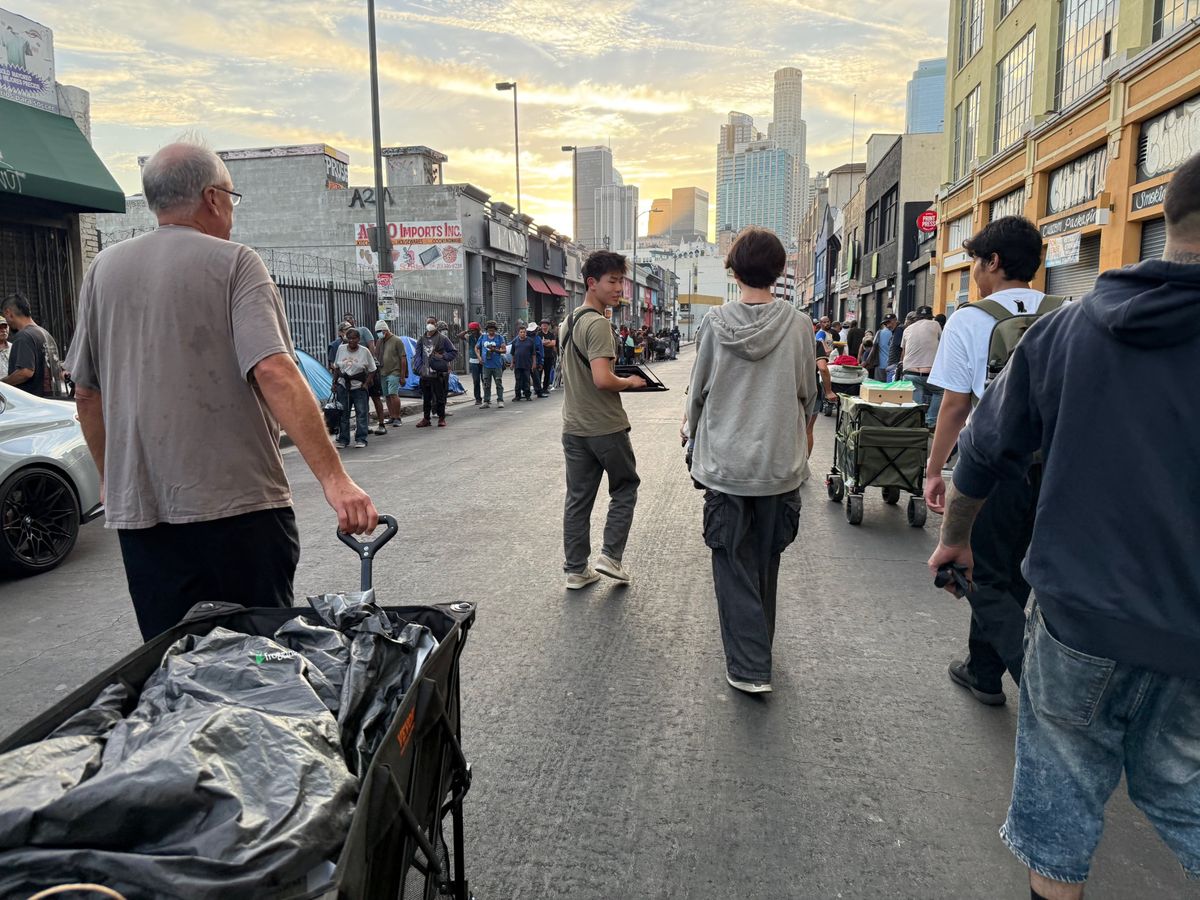
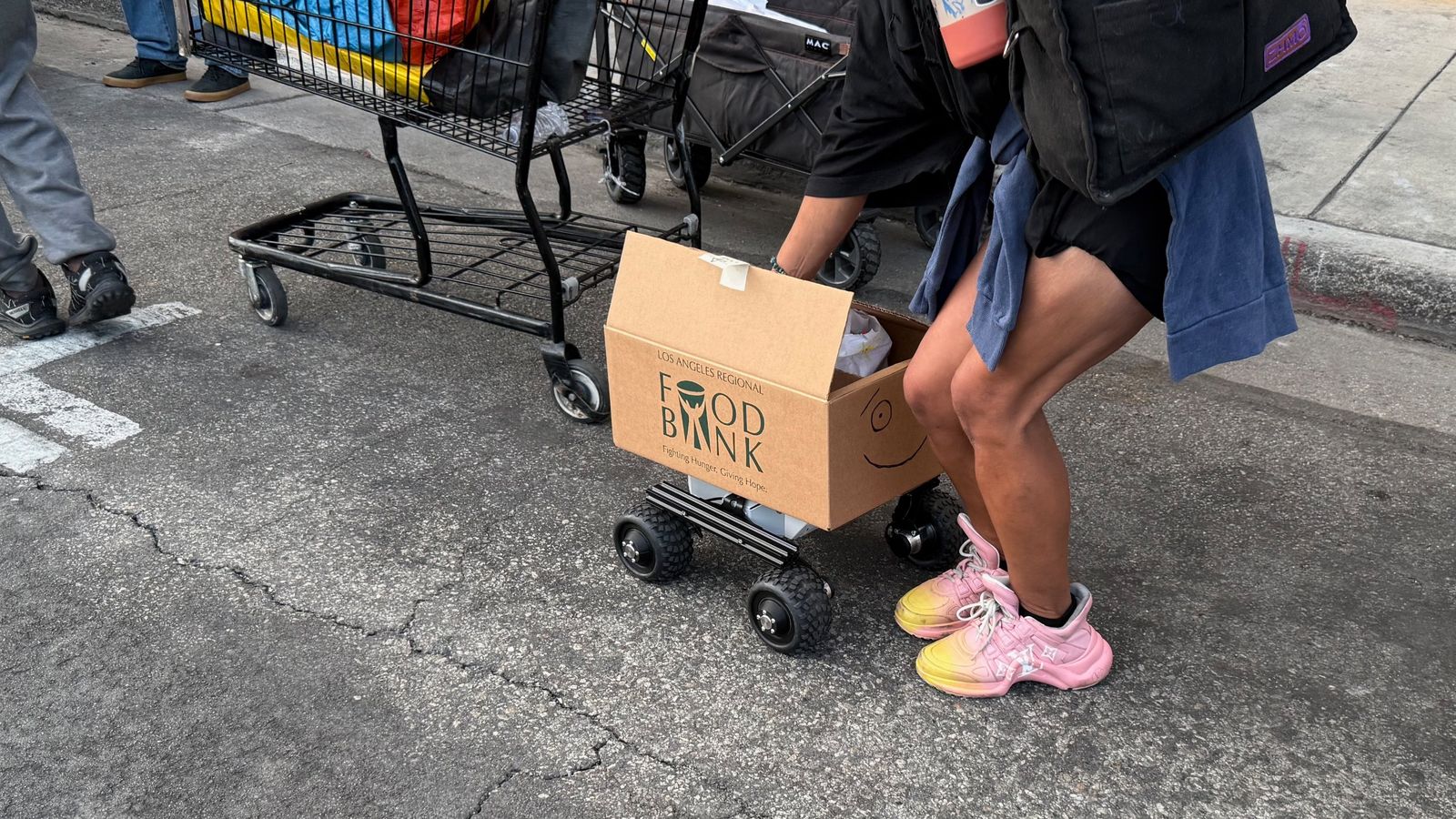
From Skid Row to Seoul
Since August 2024, the original Food Angel has been on permanent display at the Seoul Robot & AI Museum. The exhibit asks visitors a question I keep coming back to: As engineers, why do we develop technology?
Food Angel has taken me to research conferences, community deployments, the museum in Seoul, and now TEDx. But the idea behind it has stayed simple:
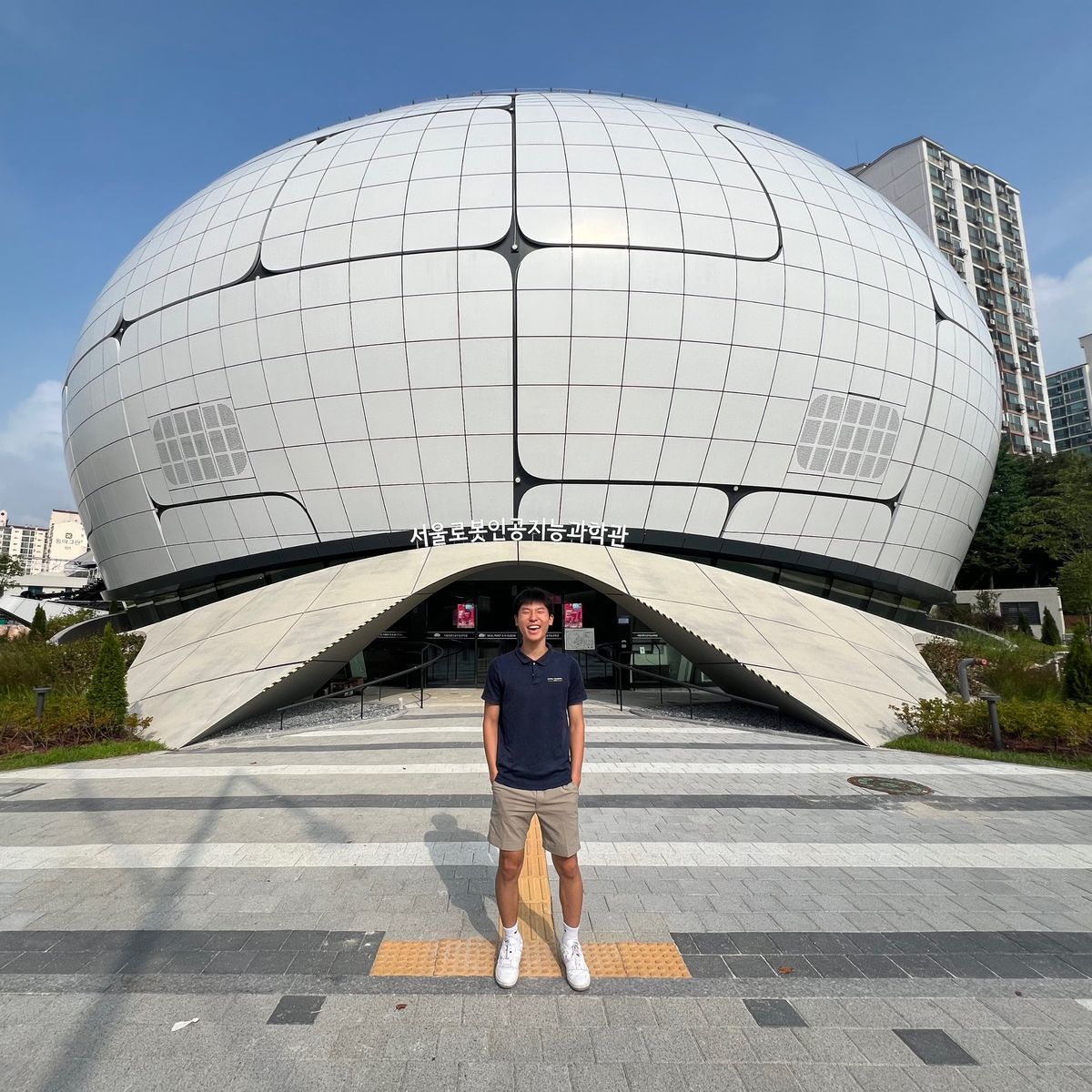
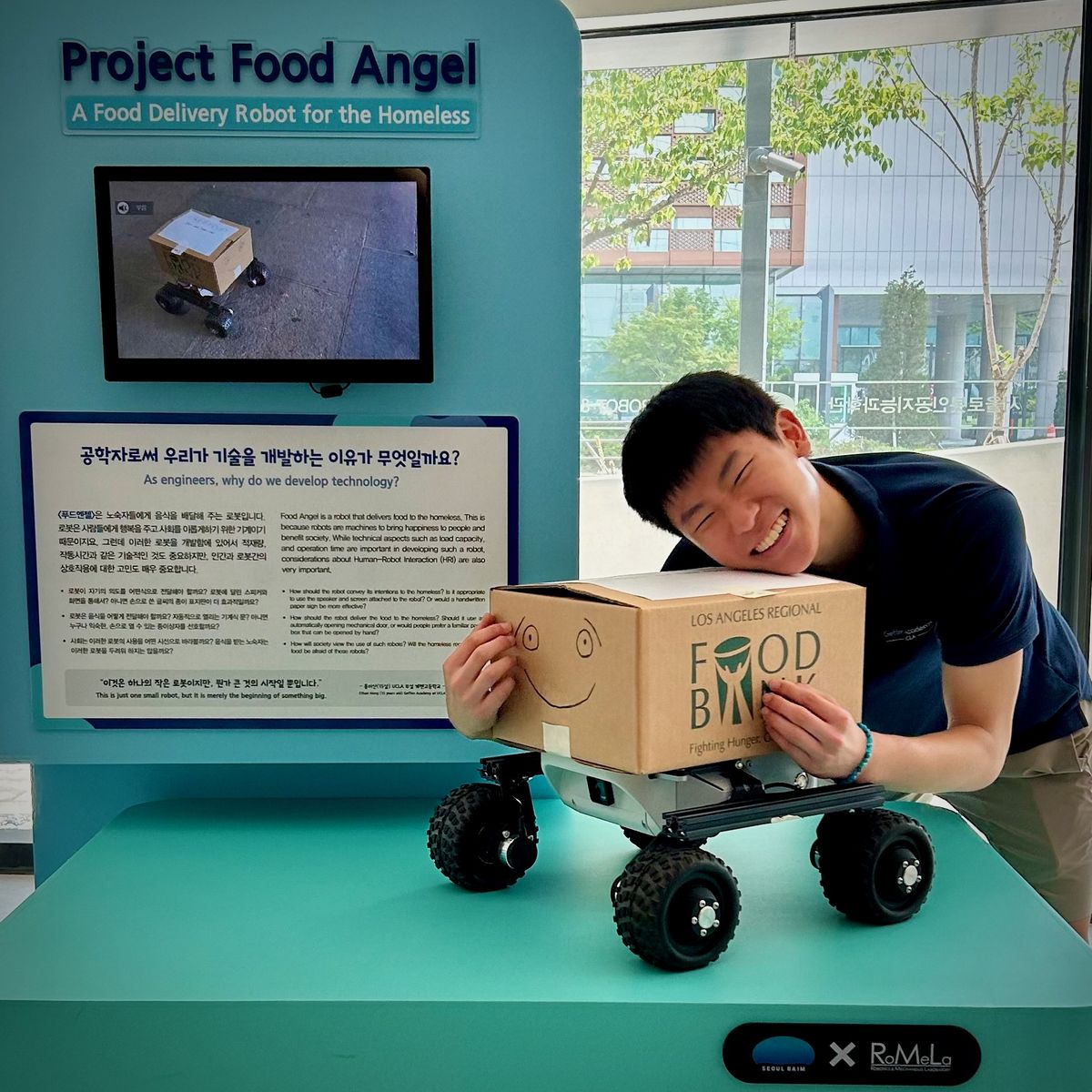
Engineering should begin with empathy.